
The role of logo in brand recognition: a leader’s guide

A logo is the single most critical visual element that shapes brand recognition and consumer perception from the very first glance. The role of logo in brand recognition goes far beyond aesthetics. A measurable impact on brand performance has been confirmed across industries, with logos acting as the primary trigger for consumer identification, trust, and recall. For marketers and business leaders, understanding how logos work at a psychological and strategic level is the difference between a brand that sticks and one that gets forgotten.
How does a logo drive brand recognition?
A logo is the primary input for consumer snap judgements, anchoring all subsequent brand evaluations through what psychologists call the halo effect. When a consumer sees your logo, they form an instant impression of your professionalism, values, and quality. That impression then colours every interaction that follows. This is not a soft, subjective claim. Expert analysis from 2026 confirms that logos function as the anchor point through which brands are first assessed and remembered.

The importance of logos becomes clearest when you consider how little time you have to make that first impression. Consumers do not pause to read your mission statement on a shelf or a social media feed. They see your mark, and they decide. A logo that communicates clarity and confidence does the heavy lifting before a single word is read.
Visual identity, the broader term used in brand strategy, encompasses your colour palette, typography, and imagery. Your logo sits at the centre of that system. It is the most repeated, most recognised element across every touchpoint your brand occupies.
Why do logos trigger such strong psychological responses?
A systematic review of 42 empirical studies found that logos stimulate consumer cognition and affect, directly driving brand attitudes, purchase intentions, and loyalty. That finding spans two decades of research and represents the most thorough evidence base available on logo psychology. The mechanism is called the stimulus-organism-response process: the logo is the stimulus, the consumer’s cognitive and emotional reaction is the organism response, and the outcome is brand attitude or purchase behaviour.
Logos that include a visual puzzle element, known in design theory as reification, increase cognitive engagement. When a consumer’s brain works slightly harder to decode a clever visual, it encodes that image more deeply into long-term memory. Think of logos that hide a secondary image or meaning within the design. That moment of recognition creates a small but powerful emotional reward.
- Cognitive processing: Simple logos are processed faster, but complexity can signal premium positioning when used deliberately.
- Emotional response: Aesthetically pleasing logo changes produce measurable increases in pleasure and affection, which translate directly into stronger brand loyalty.
- Memory encoding: Dual coding, using both a distinct graphic and text together, creates separate memory traces that improve recall.
- Purchase intent: Logos that trigger positive affect increase the likelihood of a consumer choosing that brand over an unfamiliar one.
Pro Tip: When briefing a designer, ask them to explain the cognitive hook in the logo. If they cannot articulate why a consumer will remember it, the design is not finished.
What design characteristics make a logo most effective?
Logo design and brand recognition are directly linked through four core principles: simplicity, distinctiveness, consistency, and strategic alignment. Each principle serves a different function in the recognition process.
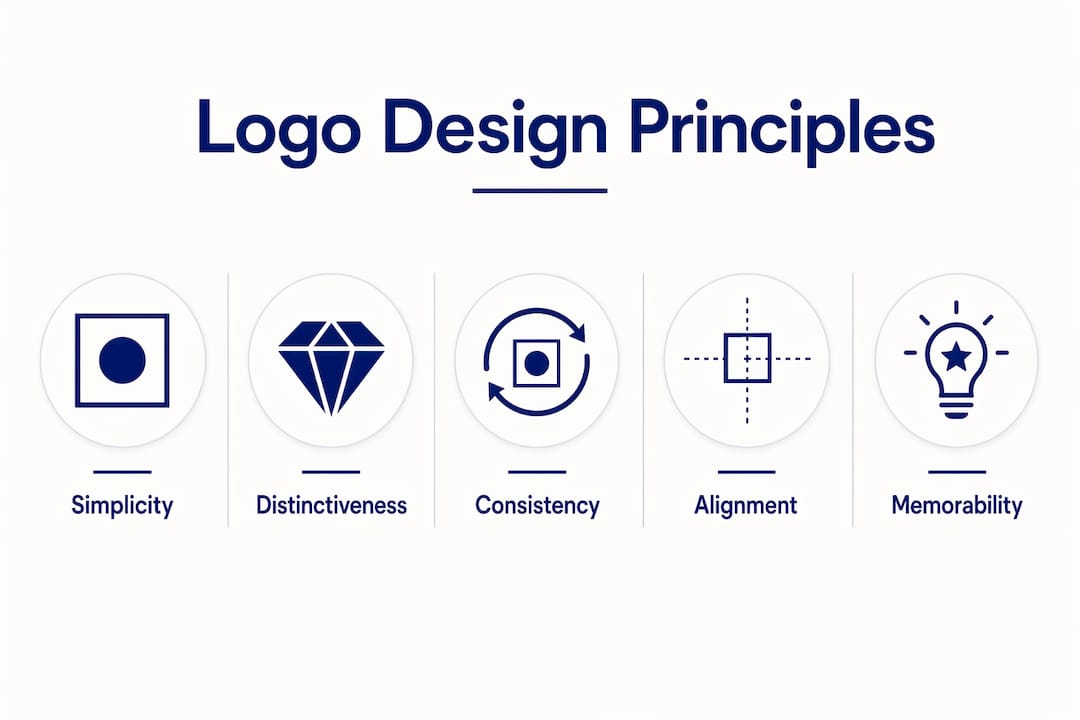
Simplicity and symmetry
Simple and symmetrical logos ease cognitive processing, making them faster to recognise and easier to recall. This is why the world’s most enduring marks tend to be geometrically clean. However, simplicity is not the same as blandness. A simple logo must still be distinctive enough to stand apart from every other mark in its category.
Distinctiveness and memorability
Distinctiveness prevents consumer confusion and improves memorability. A logo that looks like every other mark in its sector gives consumers no reason to remember it specifically. The goal is to own a visual space that no competitor occupies. This requires genuine creative thinking, not just following category conventions.
The Golden Thread concept
The Golden Thread concept describes a strategy where logo elements are deliberately echoed across all other brand assets. This goes beyond repeating a colour. It means carrying a shape, a line weight, or a structural motif through packaging, advertising, digital design, and internal communications. When every brand asset shares a visual DNA with the logo, the cumulative effect on brand equity is significantly greater than any single asset could achieve alone.
Strategic alignment
Logos function as compact visual carriers of brand meaning embedded within broader communication systems. A logo that is designed in isolation from the brand’s strategic positioning will always underperform. The most effective logos are built from the inside out, starting with what the brand stands for and working outward to visual expression.
| Design principle | Primary benefit | Risk if neglected |
|---|---|---|
| Simplicity | Faster recognition and recall | Forgettable or cluttered mark |
| Distinctiveness | Prevents confusion with competitors | Category blending, lost identity |
| Golden Thread consistency | Amplified brand equity across assets | Fragmented brand experience |
| Strategic alignment | Stakeholder trust and message clarity | Disconnect between promise and perception |
Pro Tip: Test your logo in greyscale and at thumbnail size before signing off. If it loses its identity at small scale or without colour, it will fail in the real world.
How does logo consistency build trust and long-term brand equity?
Logos appear across every brand touchpoint and act as brand infrastructure, magnifying their impact through sheer volume of exposure. Your logo appears on invoices, packaging, email signatures, social media profiles, signage, and presentations. Every single appearance is either building or eroding brand equity.
Repeated exposure strengthens recognition through a well-documented psychological principle called the mere exposure effect. Familiarity breeds trust. When consumers see a consistent, well-executed logo across multiple contexts, they develop a subconscious sense of reliability. That reliability reduces hesitation at the point of purchase.
The consequences of inconsistency are equally clear. A strong logo builds a brand asset that appreciates with every exposure; a weak or inconsistently applied logo leaks value and increases marketing costs. Every time a consumer encounters a distorted, low-resolution, or off-colour version of your logo, the trust signal weakens. Over time, that erosion shows up in higher acquisition costs and lower conversion rates.
- Consistent logo use across digital and physical channels reduces consumer hesitation.
- Poor logo quality at any touchpoint undermines the credibility built elsewhere.
- Effective logos align with corporate communication, ensuring message clarity and stakeholder trust at every level of the organisation.
- Internal communications that carry the logo reinforce brand values with employees, not just customers.
Brand awareness through logos is cumulative. Each exposure adds a small deposit to the recognition account. The brands with the highest recognition scores are almost always the ones with the most disciplined logo application, not necessarily the most creative ones.
How can marketers apply logo insights to strengthen brand strategy?
The impact of logos on branding is only realised when design decisions are grounded in consumer data and deployed with discipline. Good intentions and a beautiful mark are not enough. The following principles translate logo research into practical brand strategy.
Invest in professionally executed logo design. A logo created without strategic input or consumer validation is a gamble. Commission design that is tested with your actual audience, not just approved by internal stakeholders. Consumer response data should inform the final decision.
Build the Golden Thread into your brand guidelines. Do not treat your logo as a standalone asset. Document how its visual elements should be echoed across every brand material. Your brand communications strategy should specify exactly how the logo’s shapes, weights, and motifs appear in advertising, digital content, and internal documents.
Match logo complexity to your market segment. A luxury brand can afford a more complex mark because complexity signals premium positioning. A mass-market brand needs simplicity for rapid recognition across high-volume touchpoints. Understand your audience before you decide on design direction.
Monitor and refresh with care. Logo relevance does erode over time, but redesigns carry real risk. Abrupt changes can alienate loyal customers who have built strong associations with the existing mark. The most successful refreshes evolve the logo without abandoning its core recognisable elements. If you are seeing signs your brand needs a refresh, act on the evidence rather than on creative restlessness.
Pro Tip: Before any logo refresh, audit how your current mark performs across your top five touchpoints. Identify where recognition is strong and where it is failing. That data should drive the brief, not aesthetic preference.
Key takeaways
A logo is not a decorative asset. It is the primary driver of brand recognition, consumer trust, and long-term brand equity, and its effectiveness depends entirely on design quality and consistent deployment.
| Point | Details |
|---|---|
| Logo as recognition anchor | Logos trigger snap judgements and anchor all subsequent brand evaluations through the halo effect. |
| Psychology drives loyalty | Logos stimulate cognition and emotion, directly influencing purchase intent and brand loyalty across 42 empirical studies. |
| Design principles matter | Simplicity, distinctiveness, the Golden Thread, and strategic alignment are the four pillars of an effective logo. |
| Consistency builds equity | Every consistent exposure adds to brand equity; every inconsistent one leaks value and raises acquisition costs. |
| Strategy before aesthetics | Logo design grounded in consumer data and aligned with brand positioning outperforms design led by creative preference alone. |
Why I think most businesses underestimate their logo
After working in brand communications for years, the pattern I see most often is this: businesses spend significant budget on advertising and content, then treat their logo as a one-time cost to be minimised. That is the wrong order of priorities.
Your logo is the only brand asset that appears at every single touchpoint, from the invoice your finance team sends to the social post your marketing team publishes. It is working constantly, in contexts you cannot always control. A weak logo does not just fail to impress. It actively undermines the credibility that your campaigns are trying to build.
What surprises most business leaders is how much of logo effectiveness is structural rather than aesthetic. The Golden Thread concept, dual coding, reification: these are not design trends. They are evidence-based principles that determine whether a logo gets remembered or ignored. A logo built on these principles will outperform a beautiful but strategically empty mark every time.
The other thing I have learned is that logo consistency is a discipline problem, not a design problem. Most brands have a decent logo. Far fewer have the internal processes to apply it correctly across every channel and every team. That gap between the logo in the brand guidelines and the logo in the wild is where brand equity disappears. Aligning your strategic brand identity with rigorous application standards is where the real work happens.
Logos that endure do not stay frozen. They evolve carefully, preserving the elements that consumers have already encoded into memory while shedding what no longer serves the brand. That balance between innovation and equity preservation is one of the most demanding creative challenges in branding. Get it right and your logo becomes a genuine business asset. Get it wrong and you spend years rebuilding recognition from scratch.
— Calum
How Michaelbell approaches logo and brand identity
Brand recognition is built through consistency, and consistency requires more than a good logo file. It requires a communications infrastructure that carries your visual identity through every channel, every campaign, and every internal message.
At Michaelbell, we work with marketing teams to align logo design with broader brand strategy, ensuring your visual identity performs as hard as your messaging. Our brand communications services cover everything from strategic logo development to full brand identity systems that connect external creative with internal alignment. We also help you map how your logo and brand assets work across the customer journey, so recognition builds at every stage. If your logo is not working as hard as your business deserves, we would love to talk.
FAQ
What is the role of a logo in brand recognition?
A logo is the primary visual trigger for brand recognition, anchoring consumer snap judgements and shaping all subsequent brand evaluations through the halo effect. Its repeated presence across touchpoints builds familiarity and trust over time.
How does logo design affect consumer behaviour?
A systematic review of 42 empirical studies confirmed that logos stimulate cognition and emotional response, directly driving brand attitudes, purchase intentions, and loyalty. Aesthetically strong logos produce measurable increases in pleasure and affection.
Why does logo consistency matter for brand equity?
Every consistent logo exposure adds to brand equity, while inconsistent or poor-quality applications leak value and increase marketing costs. Discipline in logo application is as important as the quality of the original design.
What makes a logo memorable?
Logos that use reification, a visual puzzle element, increase cognitive engagement and encode more deeply into long-term memory. Dual coding, combining a distinct graphic with text, creates separate memory traces that further improve recall.
When should a brand consider refreshing its logo?
A logo refresh is warranted when recognition is declining, the mark no longer reflects the brand’s current positioning, or it fails to perform across key touchpoints. Successful refreshes evolve the logo without abandoning its core recognisable elements.